my delicious loose ends
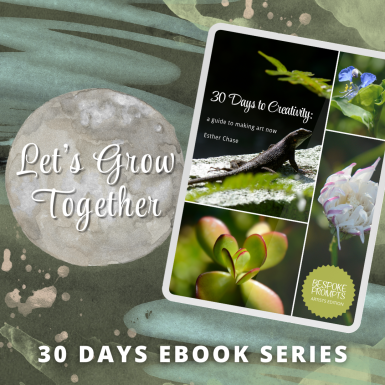
30 Days to Creativity

For the month of June, I’m crafting a daily practice, an idea from a recent UU Santa Monica sermon.
My goal in bringing it here is to unify the activities that enrich my life, despite external and internal pressure to fragment and compartmentalize who we are. This is especially true online, where we are filtered (yet again) by algorithms. I hope you’ll follow along as I navigate some new digital terrain.
Read MoreFeeling

“Hear what the material has to say to you. One must have a feeling for the organism.”
—Barbara McClintock
Throughout her career, Barbara McClintock studied the cytogenetics of maize, making discoveries so far beyond the understanding of the time that other scientists essentially ignored her work for more than a decade. But she persisted, trusting herself and the evidence under her microscope. Learn More
Humility
“…even in the presence of the least petal and the slimmest grass blade, we are but humble guests of the grassland.”
—Thomas Dean, Tallgrass Conversations: In Search of the Prairie Spirit
“The path to prairie is humility, sibling to awe. Within the prairie’s vast beauty and mystery, we must accept our smallness, set aside our arrogant dominion, know that even in the presence of the least petal and the slimmest grass blade, we are but humble guests of the grassland.” —Thomas Dean
Findings
“And what a magnificent telegraph we might send back…”
—Aimee Nezhukumatathil, World of Wonders
“All of these findings are still new, but I’m in love with the idea that plants have a temperature, that they can run warm and cold when they need to, that they can send signals to species who will help them, not harm them. And what a magnificent telegraph we might send back, especially if other humans have ever made you feel alone on this earth.” —Aimee Nezhukumatathil