my delicious loose ends
Cairns
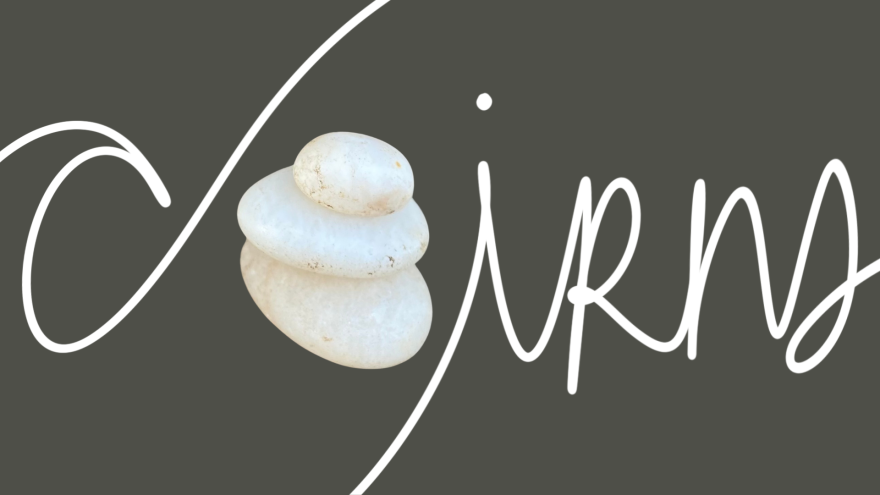
The word cairn comes from Gaelic càrn, meaning heap of stones or rocky hill.
Etymology
Originally, cairns were man-made piles of stones used for marking graves, paths, or territorial boundaries. The word entered English in the 15th century and is still commonly used in hiking and mountain navigation to describe trail markers.
So, when you see a cairn on a trail, you’re encountering a word—and a practice—that goes back thousands of years, deeply rooted in Celtic history and human connection to landscape and memory.
Quotes
“Paying attention attunes us to wonder. We look around us and are astonished at the complexity of a leaf, the gymnastics of a squirrel, the grandeur of an approaching thunderstorm. We notice a delicate, yet strong spiderweb glistening with dewdrops. We discover a maple tree in spring, dripping icicles of sweet sap, and we taste and take the very essence of tree inside of us.”
“Later, we stand under the stars, marveling at the Milky Way galaxy, splattered like raindrops across the dark windshield of the universe.”
“Each discovery is another “cairn” that tells us we are moving in the right direction.”
“With these observations of “ordinary” wonder comes awe, swiftly followed by gratitude. Our perspective shifts. Our glass moves from half empty to half full.”
—Cindy Crosby, Chasing Dragonflies
Discover more from miscellaneous
Subscribe to get the latest posts sent to your email.